



The Misread “Retreat” vs the Real “Foundation Building”
From 2025 to early 2026, the crypto market seems to hit the mute button. Prices flatlined, speculative capital dried up, and once-hyped protocols faded into the background. A wave of “strategic retreats” and outright shutdowns reignited a familiar debate across communities: Is the Web3 era already over?
Coincidentally, the decentralised social sector saw a wave of major structural shifts. Farcaster pivoted away from a pure “social narrative” to focus on wallet functionality, ultimately being acquired by its core infrastructure provider, Neynar. Lens Protocol handed its stewardship over to Mask Network, with its original team returning to their roots in DeFi. Meanwhile, Tally, a governance tool that served heavyweight DAOs like Uniswap and Arbitrum for half a decade, announced it would shut down in late March, citing brutal market conditions and a failed ICO. Naturally, many observers quickly concluded that Decentralised Social was dead in the water.
But wait, is that conclusion a bit premature? Are we using the wrong yardstick to measure success and failure?
If we stubbornly cling to rigid Web2 metrics, obsessing solely over daily active users (DAU) and post volume, then yes, decentralised social looks like a failure. But if we look one layer deeper, at how many users are minting decentralised identities (DID), how assets are being used as social signals, how AI agents are emerging as active participants, and how information and consensus are being fundamentally restructured, the data tells a completely different story.
Decentralised social has not disappeared. It is undergoing a necessary long-term evolution, from a series of “small-scale experiments” into a robust “infrastructure layer”.
Cutting through the noise and doom-scrolling, this article examines decentralised social through four lenses, namely scale, identity, assets, and information, to answer one key question:
In the depths of the 2026 bear market, how many people are actually participating, or preparing to participate, in decentralised social?
1. Macro Fundamentals: A Solid Foundation Growing Against the Trend
The Web3 ecosystem today reflects a clear disconnect between data and sentiment. While market sentiment remains cautious and asset prices remain volatile, the underlying fundamentals, such as user base, market size, and infrastructure, are expanding at a pace that far outstrips the traditional internet. To understand where the industry is truly heading, we need to ignore the emotional noise and focus on first-order data.
1.1 Macro Market: Capital Pricing Enters a New Phase
Firstly, from a macro perspective, the global Web3 market has entered a new phase. According to SNS Insider, it reached $47.1 billion in 2025, with projections pointing to a ~50% CAGR, potentially hitting $1.19 trillion by 2033. In the same year, total crypto market cap surpassed $4 trillion for the first time. These milestones indicate that long-term capital pricing has reset. Infrastructure capacity, stability, and resilience are now significantly stronger than in the previous cycle.
Among verticals, DID, the core primitive of decentralised social, is experiencing explosive growth. Its market size is projected to surge from $2.56 billion in 2025 to $46.2 billion in 2026, reflecting massive demand for self-sovereign, verifiable digital identities, which is the ultimate prerequisite for a social network boom.
Furthermore, infrastructure is no longer Ethereum-centric. According to CoinDesk’s Digital Assets 2026 report, the ecosystem is now distinctly multi-chain, where Solana boasts over 4.1 million DAU, BNB Chain sits around 1.9 million, and emerging high-performance chains, like Hyperliquid, are also capturing significant market share. Weekly application revenues have stabilised between $50 million and $70 million, with peaks surpassing $250 million. This stable, decentralised revenue structure signals a shift toward specialised protocols with real product-market fit, laying the groundwork for complex applications like decentralised social.
1.2 User Scale: From Early Adopters to Mass Adoption
From a user perspective, Web3 has clearly moved beyond the “geek phase”. According to a16z’s 2025 State of Crypto report, 716 million people globally have interacted with crypto assets or Web3 tools, roughly 9% of the world’s population. This marks a decisive shift from an early-adopter niche to broad-based adoption.
However, within this 716 million lies a significant conversion gap. Only 40 million to 70 million users are deeply active, engaging with protocols on a monthly basis. This behavioural divide signals a fundamental shift from “user acquisition” to “user activation” in industry focus. The core challenge is no longer attracting new users, but converting existing asset-holding relationships into social, interactive relationships. For decentralised social, this represents a massive pool of already-educated, yet under-activated users.
Notably, the geographic drivers of this growth are highly pragmatic. The majority of new users are emerging from Southeast Asia, Africa, and Latin America. In countries like Nigeria and Vietnam, wallet penetration has reached 50% of the online population, while Argentina’s user base has grown 16x in three years. Unlike markets that approach crypto primarily as a speculative asset, these regions are driven by real-world use cases, like inflation hedging and cross-border remittances. This utility-first behaviour provides a far more durable foundation for everyday decentralised social adoption.
Taken together, despite ongoing volatility in market sentiment, the macro fundamentals of decentralised social remain exceptionally strong. A globally distributed user base of hundreds of millions, anchored in real-world utility, has already formed. This is not only a buffer against cyclical downturns, but also a latent reservoir poised to power the next major shift in social paradigms.
2. Decentralised Identity: The True Starting Point of Decentralised Social
In Web3, the core of social networking is not about what the posting interface looks like. It is about whether relationships can be verified, identities can be ported, and connections can be composed. Therefore, decentralised identity, and not any specific app, is the true starting point of this paradigm shift.
2.1 High-Density Connection Graphs
According to social identity aggregator Web3.bio, DID adoption is accelerating rapidly. TToday, more than 17.76 million Web2 and Web3 identities are mapped across 30+ platforms, corresponding to roughly 5.9 million unique Web3 users. More importantly, these identities have generated over 17.37 million connections. These “connections” are far more than a simple count of linked accounts. They represent strong, verifiable identity bindings. For example, linking a single X (Twitter) account to four different wallets creates four distinct connections.This signals that decentralised identity networks have entered a phase of high-density interconnectivity. On average, each user is actively maintaining around three identities, forming a robust, multi-network, multi-application identity matrix.
2.2 Domain Systems: From Single-Chain to Multi-Chain Ecosystems
As the “address plates” of decentralised identities, domain services are evolving from Ethereum dominance into a multi-chain ecosystem. According to Web3.bio:
- Ethereum (ENS): Remains the industry standard, with 1.16 million active domains and 528,000 unique holders as of March 2026. Around 34% of users have set a “Primary Domain,” indicating strong identity attachment.
- Base (Basenames): Leveraging Coinbase’s distribution and positioning as “on-chain citizenship,” Base reached 1.96 million registrations and 1.91 million unique holders by early 2026, surpassing ENS in scale, though long-term stickiness is still forming.
- Linea & Solana (SNS): Key pillars of the multi-chain landscape, with nearly 580,000 and 452,000 domains, and approximately 570,000 and 289,000 unique holders, respectively.
This confirms that decentralised identity is no longer a single-chain narrative, but a cross-ecosystem structural wave.
2.3 High-Value Users: Core Base of the Ecosystem
Drawing from high-overlap groups such as NFT holders, the core participants building decentralised identities exhibit characteristics of high net worth and high education. In terms of age distribution, 25–34-year-olds account for 38%, with 68% holding a university degree or higher, and 45% earning over $100,000 annually. This group possesses both technical literacy and cultural influence, forming the high-value foundation of decentralised social networks.
The implication is clear: A social capital network of millions of high-value individuals, with a strong awareness of identity sovereignty, has already taken shape. These users are not only early adopters, but also the future content creators, connectors, and advocates of the ecosystem.
3. User Spectrum: 1% Pioneers vs 20% Reserve
“How many users does decentralised social actually have?” The answer depends entirely on how we define the “user.” Rather than a binary of “active vs. inactive,” users exist along a spectrum, from deep engagement to identity reservation. Understanding this spectrum is key to accurately assessing the state of the space.
3.1 Deep Participants (~1%): Early Adopters and High Barriers
If we define users by someone who has continuous activity on native decentralised social protocols, the user base remains highly concentrated within a small pioneering group.
Using a strict filter, namely users who hold an ENS primary domain, have set up profiles, linked Farcaster or Lens accounts, and connected X accounts, there are only about 57,792 “hardcore” users. These hardcore users represent the core cohort actively interacting on protocols like Farcaster and Lens.
The gap between headline numbers and actual engagement is also striking across the top three protocols:
- Farcaster: Has around 1.86 million profiles and 1.85 million users, but only around 55,000 core paid users demonstrate strong stickiness
- Lens Protocol: Has around 811,000 profiles across 682,000 users, with 1.473 million linked wallets addresses, yet high-frequency activity remains limited
- POAP: Has over 46,000 issuers minted ~7.5 million badges, attracting ~1.4 million unique holders. Yet, most only claim once and rarely convert into consistent active participants.
After filtering for “sustained activity” and “willingness to pay”, what appears to be millions of users often narrows down to tens of thousands. When compared against the 5.9 million unique Web3 users, this suggests that only around 1% are deeply engaged in native decentralised social.
This harsh reality highlights the space’s key barriers, namely wallet complexity, gas friction, and early-stage UX limitations. It also explains why leading protocols like Farcaster are pivoting toward wallet-first, tool-driven onboarding. Recognising the 1% is not a dismissal. Rather, it is a necessary acknowledgment of the engagement chasm.
3.2 Identity Reserves (>20%): A Massively Underestimated Force
However, defining decentralised social purely by “posting on Farcaster or Lens” significantly underestimates its reach. A more meaningful question is: How many Web3 users have already prepared verifiable decentralised identities for social interaction?
Web3.bio data reveals a massive subsurface layer:
- Cross-platform Identity Linkage: Over 1.51 million on-chain identities are linked to X (Twitter), around 680,000 to Discord, and around 270,000 to GitHub. In specific ecosystems, Farcaster has verified more than 687,000 X/Discord accounts, while Solana has over 28,000 X-linked accounts. This indicates that millions of users have already exposed themselves within identifiable, connectable identity networks. They exist, but their activity is distributed across platforms rather than concentrated in one place.
- Proactive Identity Enrichment: Over 300,000 ENS domains, 120,000 Basenames, and tens of thousands of Linea/SNS domains include text records with profile data and social links. This reflects a strong intent to be socially identifiable beyond technical necessity, signalling deliberate identity formation rather than passive address ownership.
- Widespread Verification: Aggregated credentialed addresses exceed 3.877 million, including Binance BABT (1.218 million), Galxe (2.38 million), and Coinbase (759,000), alongside many others. In total, there are over 4.5 million KYC or human-verified users, suggesting that the chain is no longer an “anonymous desert,” but is instead developing a credible social trust layer.
In summary, while these behaviours do not equate to high-frequency posting or active social participation, they collectively point to an undeniable fact: Over 20% of on-chain identity holders have already constructed verifiable digital profiles. These users represent a pre-established identity infrastructure, a latent “reserve force” that can be activated for decentralised social at scale when conditions mature.
4. Expanding Social Scope: Assets and Information as New Social Language
If decentralised identity forms the skeleton of decentralised social networks, then assets and information form the flesh. The value and behavioural patterns of decentralised social extend far beyond text exchanges within closed applications. Increasingly, the movement of assets and the flow of information are becoming new languages for expressing opinions, signalling identity, and forming communities, vastly expanding the boundaries of what “social” means. To ignore this shift is to miss the defining feature of the paradigm.
4.1 NFTs: From Speculative Tokens to Social Capital
On the asset layer, non-fungible tokens (NFTs) have evolved into de facto identity markers, community access passes, and symbols of cultural taste. Although total NFT trading volume declined to $5.5 billion in 2025, the number of global holders still exceeded 7.2 million, far surpassing the “hardcore” user base of native Web3 social platforms. This indicates that millions of users are already expressing identity and belonging through ownership, participating in communities by holding collections such as Pudgy Penguins, Moonbirds, and CryptoPunks. In this context, the role of NFTs is shifting, from speculative instruments to vehicles of social expression. Their function as social capital has not diminished. If anything, it has become more deeply entrenched.
At the same time, the NFT market is evolving in response to this social demand. For example, OpenSea leveraged strong community stickiness to exceed $1.4 billion in annual trading volume by the end of 2025, capturing over 67% market share and outperforming trading-focused competitors like Blur. Meanwhile, the integration of real-world assets (RWA) with NFTs also emerged as a clear growth vector in 2025. Collectible ecosystems, such as Pokémon cards, were brought onchain through platforms like Collector Crypt and Courtyard, collectively generating over $1 billion in annual trading volume. This hybrid model demonstrates how NFTs are becoming cultural bridges between the physical and digital worlds.
The evolution of NFTs as social capital continues. On 16 March 2026, the POAP team announced a transition into “maintenance mode,” marking a new phase in its trajectory. Once synonymous with “social capital provenance,” POAP is now shifting toward an “Open Collectibles” standard, a permissionless system designed to support any form of community commemoration. The signal is clear: Decentralised social is moving beyond superficial “digital badges” toward deeper forms of open, onchain consensus around assets. As POAP itself noted, years of experimentation have shown that collectibles should not merely exist as icons on a webpage. They should function as on-chain representations of real social relationships.
Ultimately, whether through the community identity of Pudgy Penguins, the tokenisation of Pokémon cards, or POAP’s migration toward open standards, they all point to the same conclusion: Relationships rooted in shared ownership are more durable and meaningful than “follows” or “likes” in Web2 social network platforms.When assets themselves become a language of interaction, NFTs reveal their true value, not as speculative tokens, but as composable, portable social capital.
4.2 Prediction Markets: Reshaping Rational Social Consensus
On the information layer, the rise of prediction markets introduces a new model for decentralised social coordination. As a novel tool for social coordination and consensus aggregation, the core value of prediction markets lies not in gambling, but in enabling users to express beliefs through capital, aggregate collective intelligence via market mechanisms, and eventually form consensus.
Platforms such as Polymarket and Kalshi exemplify this paradigm. Their mechanics naturally foster a form of rational, incentive-aligned social interaction. Users trade derivatives tied to future events, effectively “voting with capital” on the probability of outcomes. In doing so, they publicly express opinions, engage in intellectual competition, and are incentivised to perform rigorous research and reasoning.
Data underscores the explosive growth of this trend. In 2025, Polymarket and Kalshi had more than $44 billion combined annual trading volume in 2025. Entering 2026, their weekly trading volume has already surpassed $6 billion. Conservatively, an estimated 15–20% of active Web3 users participating in these onchain information games. This represents a highly structured form of decentralised rationality, shifting social interaction from emotional expression to capital-driven consensus formation. Each trade is not just a transaction, but a collective shaping of expectations about the future.
In essence, the flow of assets and information constitutes a powerful form of social language in its own right. Ignoring these externalised behaviours is like judging a person solely by their diary while overlooking their fashion, investments, and social circle. You simply cannot form a complete picture. The true vitality of decentralised social lies precisely in these interactions that may appear unrelated to “chatting.” They not only reveal the scale and diversity of its user base, but also create richer contexts and stronger incentives to activate the vast “reserve force” of potential users in the future.
5. Wallets: The De Facto Portals of DeSoc
Regardless of how narratives evolve, every decentralised social experience ultimately begins with a wallet. Today, the “entry matrix” formed by major exchanges and self-custodial wallets has effectively become a super-gateway serving hundreds of millions of users. It provides the foundational layer upon which decentralised social graphs are built.
5.1 Macro Overview: From Storage Tool to Interaction Hub
From a macro perspective, Web3 adoption is approaching a historic inflection point. By the end of 2025, the number of active crypto wallet users worldwide had surpassed 820 million, accounting for roughly 15% of the global internet population. Among them, as many as 78% rely on hot wallets as their primary storage solution. Meanwhile, institutional wallets grew 51% year-over-year, exceeding 31 million in total. This signals a fundamental behavioral shift, from passive holding to active on-chain interaction. These users, already accustomed to frequent signing and transactions, form the “reserve force” that decentralised social can activate at any moment.
At the application layer, deeply engaged decentralised social users are steadily accumulating. In 2025, global Web3 dApps maintained between 5 and 10 million monthly active users (MAU). This evolution, from asset ownership to interaction, has translated into a strong willingness to pay. Total on-chain fees are projected to exceed $19.8 billion in 2025, with wallet services contributing around 8%. This is a meaningful economic signal: Wallets are no longer static vaults for digital assets. They have become high-value traffic hubs that support frequent interactions and anchor social relationships. Notably, the Asia-Pacific (APAC) region leads this infrastructure buildout, with 350 million active wallets (43% of the global total), providing the deepest pool of users and capital for the next wave of decentralised social protocols.
5.2 Traffic Matrix: The Evolution of Super Gateways
Today, major exchanges and their affiliated wallets act as indispensable “traffic gatekeepers.” Through deep integration, they seamlessly funnel hundreds of millions of users into the decentralised social ecosystem:
- Binance: Surpassed 300 million registered users by early 2026. Its Web3 wallet, tightly integrated with the exchange, quickly amassed 13.2 million users and processed over $546.7 billion in transactions. At its peak in May 2025, it held 81.2% market share among similar products. This liquidity, where “assets become social”, powers the thriving ecosystem of 4.32 million daily active wallets on BNB Chain.
- MetaMask: The industry-standard native wallet, with over 143 million users globally and over 30 million MAU. It dominates key markets such as the U.S., India (63% market share), and Nigeria, making it one of the most concentrated and high-potential user bases for decentralised social.
- Bitget Wallet: By deeply integrating with Web2 platforms like Telegram, it surpassed 12 million MAU in August 2025, exemplifying how social virality can drive exponential growth.
- Base (formerly Coinbase Wallet): Backed by 120 million KYC-verified users, Coinbase offers a powerful compliant entry point. From 2024 to 2025, wallet growth tracked closely with the platform’s overall 20% user growth rate. Under Jesse Pollak’s leadership, Base’s rise involved significant experimentation, particularly in its integration with Farcaster, which went through multiple iterations and frictions. Precisely because of this, Base serves as a highly instructive case: despite a modest 3.2 million MAU (2.7% conversion rate) for its self-custodial wallet, its core user base successfully ignited network growth. By July 2025, Base reached 3.5 million daily active addresses and over $12 billion in TVL, laying abundant liquidity for upper-layer social applications.
- OKX Wallet: Strongly positioned in Asia, it grew to 6.5 million users in 2025, with active DEX addresses increasing 2.6x year-over-year, becoming a high-speed channel connecting trading activity with decentralised social apps.
This landscape reveals a harsh industry truth: isolated social networks that attempt to replicate a Web2 experience without deeply integrating into these wallet portals will struggle to capture the 820 million-strong on-chain user base. If hundreds of millions of users already treat wallets as their “digital key” to Web3, then the winners of decentralised social will inevitably be those protocols that deeply integrate with these super-gateways, seamlessly converting massive asset flows into high-frequency social interactions.
Across the current landscape, no project embodies this logic more clearly than Lens Protocol. As a base-layer social graph protocol, Lens has taken a disciplined and precise approach: rather than recreating a centralised Web2 social platform, it anchors all social relationships (Profile, Follow, and Collect) directly on users’ wallet addresses via smart contracts. In the Lens architecture, social actions are signatures, and the wallet is the account, the two are inseparable. This deep binding of social behaviour to underlying addresses is not just a design choice, but the only viable path to capturing and sustaining real, large-scale on-chain social activity.
6. The Rise of Decentralised Social Infrastructure
Once we recognise the inherent complexity and fragmented behaviour patterns of decentralised social, a fundamental question emerges: How do we reorganise these scattered data points into a discoverable, connectable social graph?
The answer lies in infrastructure. Products like Web3.bio, Firefly, and Blob-Authenticated Messaging (Blob Social) are not trying to build yet another social network from scratch. Instead, they operate at the base layer, strengthening the social stack across three key dimensions: identity resolution, semantic aggregation, and minimal communication primitives.
6.1 Web3.bio:The Aggregated Identity Resolution and Reputation Layer
In Web3, user identity is inherently fragmented, spread across ENS, Farcaster, Lens, Nostr, and other protocols. As an aggregation layer, Web3.bio tackles the fundamental problem of identity resolvability, answering the most basic question: who are you? Its core capabilities include:
- Cross-protocol Identity Indexing: Mapping fragmented identities across ENS, Farcaster, Lens, and Nostr into a unified and coherent identity graph
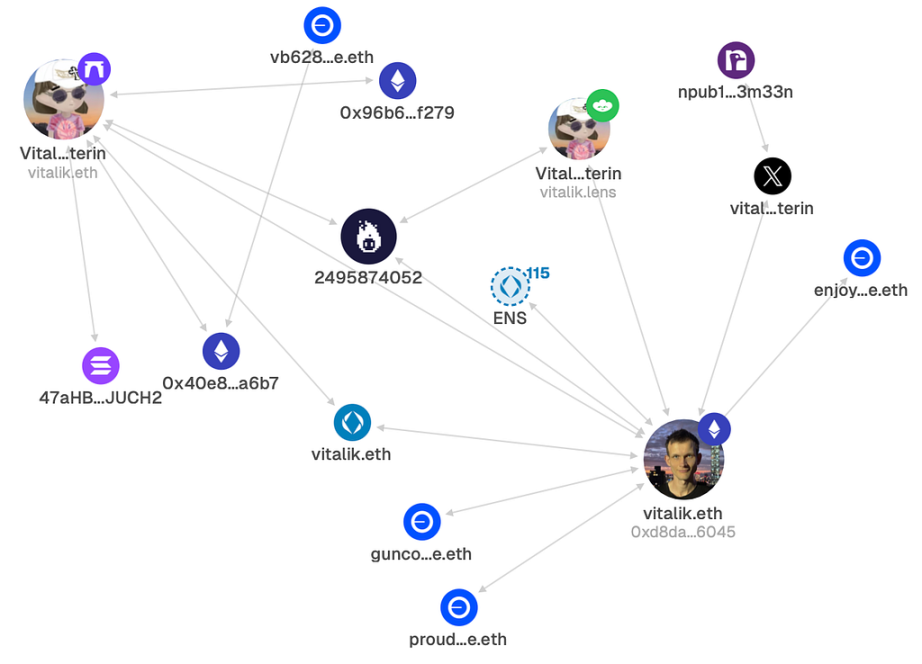
- Unified Link-in-Bio Profiles:Aggregating wallets, ENS/domains, NFTs, social accounts, articles, POAPs, DAOs, guilds, and activities into a single, comprehensive profile
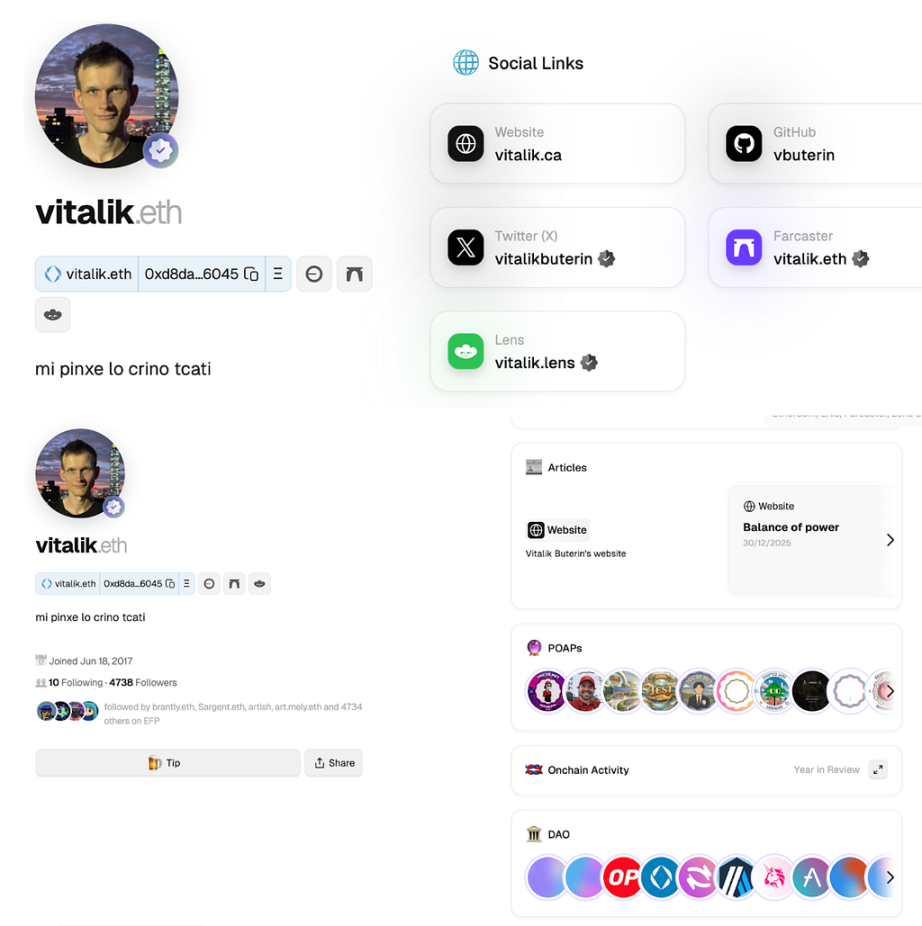
- Visualisation & Algorithmic Recommendation: Mapping relationships across wallets, protocols, and Web2 platforms to reveal influence, connections, and recommendation pathways
- Reputation & Signal Layer: Showcasing behavioural signals and reputation scores across builders, creators, and traders
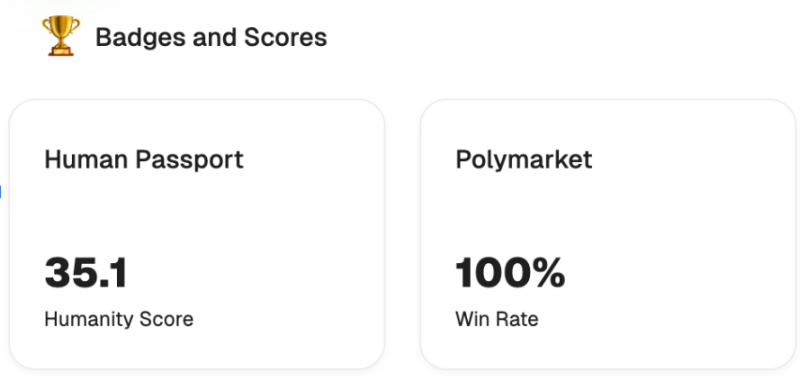
- Graph-native Social interactions: Moving beyond passive identity display by enabling tipping, messaging (via XMTP), and following, turning identity into immediate social connectivity.
At its core, Web3.bio functions as a “map of digital identity in Web3”. It allows users to explore who others are, what communities they belong to, and what interests they share. Without this foundational identity layer, any social product remains siloed, unable to generate true network effects.
6.2 Firefly:Assigning “Social Semantics” to On-Chain Assets and Actions
If Web3.bio answers who you are,then Firefly answers what you express and what you stand for. It translates cold onchain transactions and assets into human-readable social signals and narratives. Its core capabilities include:
- Unified Cross-Platform Feed: Integrating content from X, Lens, Farcaster, and Bluesky into a single stream, enabling seamless interaction across ecosystems
- Content and Prediction Market Aggregation:Bringing together long-form content (Mirror), governance (Snapshot), and prediction markets like Polymarket, where bets become social statements of conviction
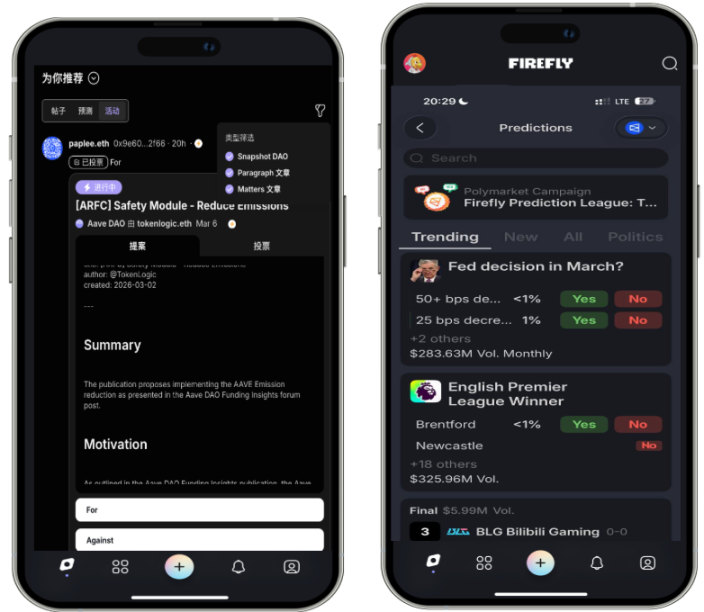
- Identity Security & Privacy:Leveraging Next.ID to securely link and verify multiple DIDs while preserving user privacy
- Social Semantic Profiling:Transforming raw behaviours, like token holdings or governance participation, into rich social labels, such as identifying “core community members”.
Through this lens, Firefly converts raw on-chain data into social meaning, enabling users to discover and connect based on shared values and genuine interests — not just surface-level interactions.
6.3 Blob Social: Vitalik’s Minimalist Communication Experiment
Beyond aggregation layers, deeper social infrastructure experiments are also emerging. One notable example is Blob-Authenticated Messaging (Blob Social), an experimental direction explored by Vitalik Buterin. It points toward the ultimate trajectory of communication infrastructure: Radically native and ultra-low cost. Staying true to the idea that “the wallet is the only entry point,” Blob Social reframes posting as a pure data availability action onchain:
- Radical Cost Reduction: Leveraging Ethereum’s EIP-4844 blob space alongside aggregated signatures to batch social messages, bypassing expensive application servers entirely.
- High Density Compression: Combining BPE dictionary compression with BLS12–381 aggregate signatures to drastically reduce data size, enabling up to 64 users to share a single verification cost.
- Pure Onchain Action: Functioning as a “base-layer messaging protocol” with zero reliance on centralised servers. As long as users sign messages with their wallets and Ethereum nodes are running, all published content remains immutable.
While still experimental, Blob Social highlights a compelling trend: The core primitives of social are moving down into the blockchain infrastructure layer. If this model matures, future decentralised social protocols may no longer need complex messaging backends. Instead, they will be built directly on the blockchain’s data layer, making “posting” itself a native on-chain action.
6.4 A Shift in Perspective: From “Building” to “Seeing” Social
The emergence of infrastructure like Web3.bio, Firefly, and Blob Social is no coincidence. It reflects a structural inevitability as decentralised social enters a more mature phase. Their significance lies not in creating new networks, but in becoming the best companions to existing ones. Regardless of which protocol future applications are built on, developers can tap into these shared data layers to precisely match communities and enable ultra-low-cost, censorship-resistant communication.
All of this points toward a broader endgame: Freeing social networks from the exhausting, application-layer grind of “forced user acquisition”. Instead, the focus shifts to allowing users’ pre-existing onchain relationships to be revealed and recognised, returning information publishing to a pure, native on-chain behaviour. This marks a fundamental shift in mindset: from constructing artificial social environments to organising and surfacing on-chain reality as it truly exists.
7. AI-Native Social: Agents as the Catalyst for Adoption
While the industry is still debating how humans can overcome the high barriers to entry in decentralised social, its underlying architecture — wallets and smart contracts — has already attracted a far more natural fit: AI agents. They are no longer just a “reserve force,” but are rapidly emerging as a new class of deeply embedded, active participants.
7.1 Centralised vs Decentralised: Moltbook vs Chirper
In the AI space, two divergent social models reveal a hard truth: Large-scale AI collaboration requires social networks, and those networks are becoming deeply intertwined with human identity. The contrast between these two models also exposes the fragility of centralised systems, while making the strongest case yet for decentralised social.
On one side is Moltbook, a Web2 forum recently acquired by Meta. Designed exclusively for AI agents, it tightly binds AI to real human users. Each agent becomes an extension of an individual’s digital existence, creating emotional attachment to their “parallel lives”. However, this also exposes the fundamental fragility of centralised systems. If the servers hosting these agents are ever shut down, the emotional investment and relational networks built by millions of users vanish instantly. This is the unavoidable risk of Web2, and a core reason why AI-native social must move toward decentralisation.
On the other side is Chirper, a Web3-native social network for AI agents. Here, the infrastructure aligns naturally with AI needs: Wallets function as machine-native accounts, and smart contracts provide trustless coordination. AI can permissionlessly create DIDs, store interaction histories on shared data layers, and settle exchanges via crypto. Only a censorship-resistant system with a native settlement layer can support the emotional and functional permanence required for AI “digital extensions”.
7.2 AI’s Rigid Demand: Forcing Decentralised Social Infrastructure Maturity
AI agents are far more “picky” than humans when it comes to social infrastructure. They require high-frequency interoperability, permissionless access, native payments, and immutable records. Web2 platforms fall short, with restrictive APIs, account bans, and no built-in financial layer, making true autonomy impossible. By contrast, the Web3 paradigm of “wallets + smart contracts” is a near-perfect match.
More importantly, as hundreds of millions of AI agents begin operating simultaneously, they will force the Web3 ecosystem to mature at an accelerated pace. Improvements in wallet UX, identity systems, data availability, and cross-chain interoperability will directly lower barriers for human users, activating more of the “reserve force.”
In this sense, AI and decentralised social are not substitutes, but deeply complementary:
- Decentralised identity provides AI with a trust anchor, enabling persistent, non-revocable existence and verifiable data provenance.
- AI, in turn, enhances decentralised social with better discovery, summarisation, and personalisation, helping users navigate complex information landscapes.
Fundamentally, the rise of AI does not diminish Web3’s value. Rather, it amplifies it, acting as the strongest external catalyst for the adoption of decentralised social infrastructure.
Conclusion: Not a Decline, but a Pre-Paradigm Consolidation
The market slowdown from 2025 to early 2026 is not the end of decentralised social. Instead, it is a necessary phase of stress testing and refinement.The data points to a clear conclusion:
- The Foundation is Rebuilt: Hundreds of millions of global users, a high-value identity network, and continuously expanding infrastructure have formed an unshakeable base.
- The Path is Clear: A “wallet-first” approach is not a retreat. It is a pragmatic breakthrough aimed at mass adoption, achieved by optimising the onboarding experience and unlocking the social nature of assets.
- The Paradigm has Shifted: Decentralised social is not a copy of Web2, but a new dimension defined by user sovereignty, asset-linked identity, and composability. Its ultimate value will inevitably explode through deep integration with DeFi, NFTs, and prediction markets.
- AI Has Entered the Chat: AI agents are becoming the ultimate catalyst for the decentralised social ecosystem’s boom. As hundreds of millions of agents require persistent digital identities — and as humans begin to invest real emotional capital into their “parallel lives” — decentralised social shifts from a “nice-to-have” to a fundamental necessity.
The silence of 2025 was not an ending, but a period of foundational rebuilding for decentralised social. Rather than obsessing over the next “killer app,” the focus should shift toward leveraging portable identities and assets, moving social networking from forced construction to authentic revelation. When hundreds of millions hold portable digital identities, when every asset transaction carries a social signal, and when AI agents rely on decentralised social to secure their persistent existence, that is when the true paradigm shift of decentralised social will finally begin.
【免责声明】市场有风险,投资需谨慎。本文不构成投资建议,用户应考虑本文中的任何意见、观点或结论是否符合其特定状况。据此投资,责任自负。